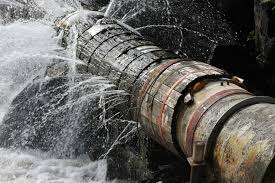
Plumbing Failures
Moisture Mapping & Investigation
How Plumbing Failures Create Large-Loss Claims
Plumbing failures in commercial and multi-family buildings have a unique and often underestimated potential for widespread damage. Unlike weather events, internal plumbing failures often go undetected for hours or days — particularly in unoccupied areas, above concealed ceiling assemblies, or in wall cavities along pipe chases. A single burst supply line on an upper floor of a multi-story building can introduce thousands of gallons of water into the structure before detection, with damage cascading down through floor assemblies, wall cavities, and mechanical spaces.
Common plumbing failure types in large commercial claims include: - Burst supply lines (freeze-related, pressure failure, or age-related deterioration) - Slab leaks — supply or drain failures beneath concrete slabs that migrate laterally through the slab and into adjacent assemblies - Failed sprinkler systems — accidental or mechanical actuation saturating large floor areas - HVAC condensate overflows — chronic or acute condensate line failures introducing moisture into ceiling cavities - Drain and waste line failures — sewage or gray water contamination events requiring both moisture and biohazard remediation protocols
The Challenge of Hidden Moisture in Plumbing Events
Commercial buildings are designed with complex assemblies that effectively conceal and contain plumbing-related moisture. Concrete floor slabs, raised access floors, suspended ceiling systems, and fire-rated shaft enclosures all create pathways through which water migrates silently. By the time a property manager sees water at the surface, the event has often already affected adjacent spaces, multiple floors below, and concealed structural components.
Slab leaks present a particular challenge: moisture migrates through the slab itself and spreads laterally beneath floor finishes, saturating adhesives, subfloor materials, and sometimes migrating into adjacent wall bases well away from the leak source. Without systematic moisture mapping, the full affected area is rarely identified through visual inspection.
CDS Investigation Methodology for Plumbing Events
CDS investigators deploy a systematic approach calibrated to the complexity of commercial plumbing loss events:
Structural Review: We begin with a review of building plans (where available) to identify plumbing chase locations, floor penetrations, and likely migration pathways.
Thermal Imaging Survey: FLIR-equipped investigators scan all suspect areas — floors, walls, ceilings, and below-slab accessible areas — to identify thermal anomalies consistent with moisture.
Moisture Meter Mapping: Quantitative moisture readings are taken at systematic grid intervals across affected floors and walls, with readings recorded and plotted on floor plans.
Tramex DEC Surface Scanning: For slab-level events, our Tramex DEC scanner provides non-destructive capacitance-based moisture mapping of concrete and floor assemblies without requiring coring or probing.
Multi-Floor Documentation: In multi-story events, we systematically document all affected floors above and below the identified failure point to capture the full vertical extent of migration.
Why Thorough Documentation Matters for Plumbing Claims
Plumbing failure claims are frequently disputed on scope. Carriers and their representatives often push back on affected areas that extend beyond the immediately visible damage, arguing that distal moisture readings reflect pre-existing conditions or are unrelated to the claimed event. CDS documentation is specifically designed to address these disputes: our thermal images, moisture readings, floor plan diagrams, and written analysis create a corroborated, science-based record of water migration from the source through all affected assemblies.
This documentation package protects property owners and their representatives by establishing the full extent of the loss before remediation begins — ensuring that the remediation scope addresses the actual damage and the claim reflects the true loss.
Contact CDS for Plumbing Loss Documentation
Whether your event is a single-floor pipe burst or a multi-story cascading plumbing failure, CDS provides the systematic moisture investigation and documentation your claim requires. Call our emergency line at (303) 242-6361 for rapid deployment.